What Is the Difference Between Montessori and Traditional Teaching Methods?
Introduction to Montessori Teacher Training and Modern Education Methods
Education is evolving rapidly. Parents today want learning environments that nurture independence, creativity, and critical thinking. This shift has increased interest in Montessori Teacher Training and alternative teaching philosophies worldwide.
If you are planning to build a career in early childhood education, understanding the difference between Montessori and traditional teaching methods is essential. It helps you choose the right path, gain professional credibility, and align your teaching style with global standards.
In this detailed guide, you will learn:
- What makes Montessori education unique
- How it differs from traditional classroom methods
- Why enrolling in a Montessori Teacher Training Course can transform your career
- Career opportunities after completing a Montessori Training Course
Let us explore both systems step by step.
What Is Montessori Teacher Training Course and How Does It Work?
Montessori Teacher Training Course is a professional certification program designed to prepare educators in the Montessori philosophy developed by Dr. Maria Montessori. It focuses on child-centred learning, independence, and hands-on exploration.
A structured Montessori Teacher Training typically includes:
- Montessori philosophy and principles
- Child psychology and development stages
- Classroom management techniques
- Use of Montessori materials
- Practical training and lesson planning
- Assessment through observation rather than exams
Many institutes now offer Montessori Training Online and Montessori Course Online programs, making it accessible for aspiring educators across the globe.
What Is the Traditional Teaching Method in Schools?
Traditional teaching is the conventional classroom system used in most schools. It is teacher-centred and curriculum-driven.
- Key features of traditional education:
- Teacher-led instruction
- Fixed curriculum and syllabus
- Textbook-based learning
- Uniform lesson pace for all students
- Regular exams and grading systems
- Structured classroom seating
This method focuses primarily on academic achievement and standardized assessment.
Difference Between Montessori and Traditional Teaching Methods
| Basis of Comparison | Montessori Method | Traditional Teaching Method |
|---|---|---|
| Teaching Approach | Child-centred learning guided by trained educators through Montessori Teacher Training principles | Teacher-centred instruction led primarily by lectures |
| Role of Teacher | Facilitator and observer who guides learning | Instructor who delivers lessons and controls classroom |
| Learning Style | Hands-on, activity-based, experiential learning | Textbook-based and lecture-driven learning |
| Classroom Setup | Flexible seating, mixed-age groups, Montessori materials | Fixed seating, same-age groups, standard classroom setup |
| Curriculum Structure | Flexible and child-paced, focused on mastery | Fixed syllabus with structured timelines |
| Assessment Method | Observation-based evaluation without grades | Written exams, tests, and graded assessments |
| Student Independence | Encourages self-direction and decision-making | Limited autonomy, teacher-directed tasks |
| Learning Pace | Individual pace supported through Montessori Training Online methodology | Uniform pace for all students |
| Skill Development | Focus on life skills, creativity, and emotional growth | Focus on academic achievement and subject knowledge |
| Career Preparation | Requires certified Montessori Teacher Training Course for professional teaching | Requires general teaching qualification |
Montessori vs Traditional Teaching Methods: Key Differences Explained
Understanding the core differences helps educators choose the right teaching philosophy.
1. Teaching Approach: Child-Centred vs Teacher-Centred
Montessori Method
- Students choose activities independently
- Teacher acts as a guide or facilitator
- Focus on self-directed learning
Traditional Method
- Teacher leads the lesson
- Students follow instructions
- Limited autonomy in learning
Montessori Course Online prepares educators to observe children and guide them rather than dominate instruction.
2. Classroom Environment and Learning Materials
Montessori Classrooms
- Specially designed Montessori materials
- Mixed-age classrooms
- Freedom of movement
- Hands-on experiential learning
Traditional Classrooms
- Age-segregated classes
- Desk-based seating
- Standard textbooks and worksheets
- Limited hands-on tools
During a Montessori Training Course, trainees learn how to use Montessori materials effectively to enhance cognitive development.
3. Role of Assessment and Evaluation
Montessori System
- Observation-based assessment
- No pressure of grades
- Focus on progress and development
Traditional System
- Written exams and tests
- Marks and ranking
- Performance comparison
Montessori Teacher Training emphasizes holistic growth rather than competition.
4. Learning Pace and Personalization
Montessori
- Individual learning pace
- Personalized attention
- Encourages mastery before moving ahead
Traditional
- Uniform learning speed
- Fixed syllabus deadlines
- Students move together regardless of understanding
This flexibility is why many educators are enrolling in Montessori Course Online programs today.
Step-by-Step Comparison: Montessori vs Traditional Education
Step 1: Identify Learning Philosophy
Montessori focuses on independence and experiential learning.
Traditional education focuses on structured academic instruction.
Step 2: Observe Classroom Setup
Montessori classrooms are activity-based and interactive.
Traditional classrooms are lecture-based and structured.
Step 3: Evaluate Student Role
Montessori students lead their learning journey.
Traditional students follow teacher instructions.
Step 4: Review Assessment Methods
Montessori uses observation and skill mastery.
Traditional uses tests and examinations.
Step 5: Understand Teacher’s Role
Montessori teachers guide and support.
Traditional teachers instruct and evaluate.
This structured comparison is commonly included in Montessori Teacher Training Course modules to help trainees clearly understand pedagogical differences.
Detailed Montessori Teacher Training Course Description
A professional Montessori Teacher Training program is designed to develop both theoretical knowledge and practical teaching skills.
Core Modules Covered in Montessori Training Course
- Introduction to Montessori philosophy
- Stages of child development
- Sensorial education methods
- Practical life activities
- Language and mathematics foundations
- Classroom organization
- Lesson planning and observation techniques
Learning Formats Available
- Classroom-based programs
- Montessori Training Online
- Hybrid learning formats
- Self-paced Montessori Course Online
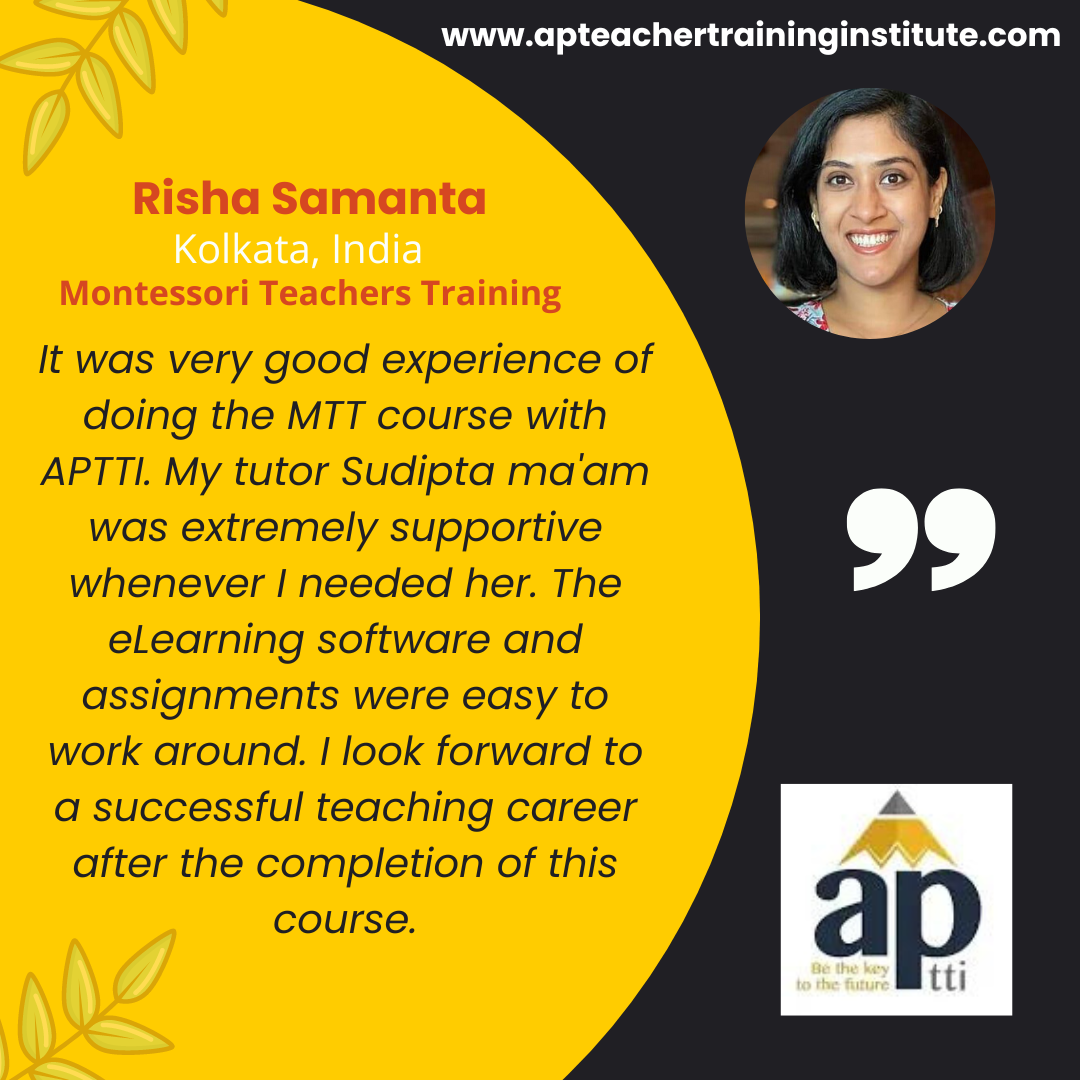
Online formats allow working professionals and homemakers to upgrade their qualifications without disrupting their schedules.
Benefits of Enrolling in Montessori Teacher Training
Choosing a Montessori Teacher Training Course provides several long-term advantages.
Professional Benefits
- Internationally respected certification
- Global job opportunities
- Higher employability in preschools
- Professional credibility
Personal Growth Benefits
- Deep understanding of child psychology
- Improved communication skills
- Better classroom management
- Creative teaching techniques
Financial and Career Flexibility
- Work in private schools
- Start your own Montessori center
- Teach abroad
- Offer home-based early learning programs
Completing Montessori Training Online also allows career transitions without relocation.
Career Opportunities After Montessori Teacher Training
After completing a certified Montessori Teacher Training Course, you can explore multiple career paths.
Career Options
- Montessori Preschool Teacher
- Early Childhood Educator
- Curriculum Coordinator
- Child Development Consultant
- School Administrator
- Online Early Education Instructor
Global Opportunities
Many countries prefer certified Montessori educators due to the growing demand for child-centered education. Completing a recognized Montessori Course Online enhances global mobility.
Why Montessori Teacher Training Is in High Demand Today
The education sector is shifting toward holistic learning. Parents are looking for schools that encourage creativity, emotional intelligence, and independence.
Montessori education aligns perfectly with these expectations.
Reasons for rising demand:
- Focus on real-life skills
- Reduced academic pressure
- Strong cognitive development
- Emotional and social growth
- International acceptance
Start Your Montessori Training Course Today and Upgrade Your Professional Credibility
Professional credibility matters in the education industry. A certified Montessori Teacher Training Course strengthens your resume and increases your employability.
Whether you are a beginner or an experienced teacher, enrolling in a Montessori Course Online can help you:
- Enhance your teaching methodology
- Transition into early childhood education
- Improve salary potential
- Work independently
Choose a trusted institute and begin your journey now.
FAQ: Montessori Teacher Training Course Online
Q: What is Montessori Teacher Training Online?
A: Montessori Teacher Training Online is a flexible certification program that teaches Montessori philosophy, child development, and classroom methodologies through digital platforms, allowing aspiring educators to gain professional qualifications without attending physical classes.
Q: Is a Montessori Teacher Training Course certification recognized globally?
A: Yes, an accredited Montessori Teacher Training Course certification is widely recognized internationally and enables graduates to apply for teaching roles in preschools and early learning institutions across various countries, subject to local regulations.
Q: Who should enroll in a Montessori Training Course?
A: A Montessori Training Course is ideal for aspiring teachers, preschool educators, homemakers, career changers, and anyone passionate about early childhood education and child development.
Q: What career opportunities are available after completing a Montessori Course Online?
A: After completing a Montessori Course Online, candidates can work as Montessori teachers, early childhood educators, curriculum planners, preschool administrators, or even establish their own Montessori learning centre.
Q: How long does Montessori Teacher Training take to complete?
A: The duration of Montessori Teacher Training varies by level and format, typically ranging from a few months to one year, with online programs offering flexible schedules for working professionals.
Q: Can I pursue Montessori Training Online while working full-time?
A: Yes, Montessori Training Online programs are specifically designed for flexibility, allowing working professionals and parents to study at their own pace while balancing career and personal responsibilities.
Begin Your Career with Montessori Teacher Training Today
If you are passionate about early childhood education and want a flexible, respected career path, Montessori Teacher Training is the perfect starting point.